
Accessible Tourism: When the Experience Is for Everyone
Accessible Tourism: When the Experience Is for Everyone
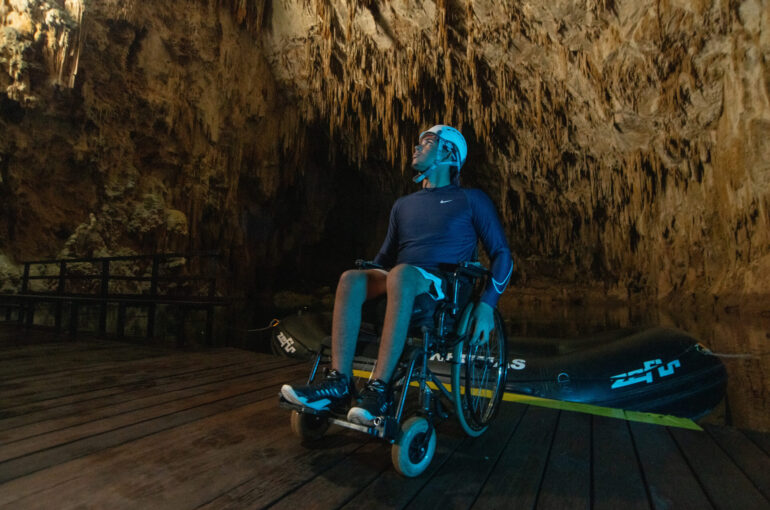
Traveling is one of life’s great pleasures. Discovering landscapes, experiencing different cultures, and creating lasting memories are some of the reasons why we want to explore new destinations. But how can we ensure that these experiences are accessible to everyone, regardless of their physical, sensory, or cognitive abilities?
Accessible tourism starts with this premise: creating the conditions for everyone to discover, move around, and enjoy tourist destinations with autonomy, safety, and dignity. This includes everything from the infrastructure of spaces to communication, professional training, and the way each visitor is welcomed.
In Mato Grosso do Sul, this discussion has been gaining momentum through initiatives aimed at making destinations and tourism experiences more inclusive.
Mato Grosso do Sul: Pathways Toward More Inclusive Tourism
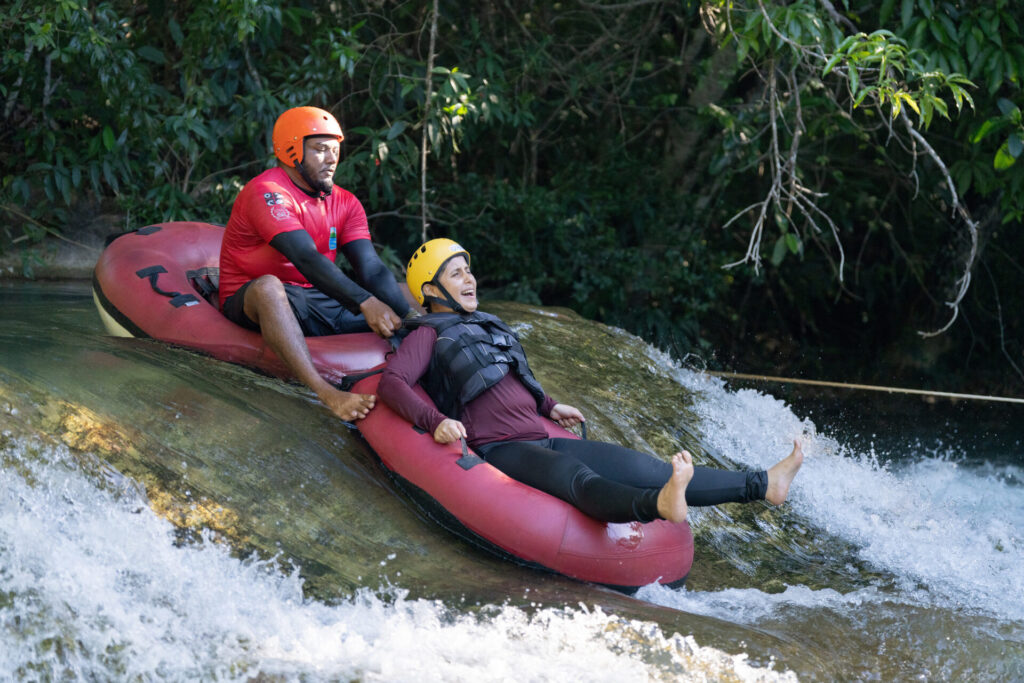
Known for the richness of its biomes and the diversity of its nature-based experiences, Mato Grosso do Sul has been developing initiatives to expand accessibility across its tourist destinations. In Bonito, one of the state’s main ecotourism destinations, 293,712 tourists visited the region in 2025, reinforcing the importance of creating experiences that can be enjoyed by everyone.
The Mato Grosso do Sul Tourism Foundation (Fundtur MS), through its Accessible and Inclusive Tourism program, has been advancing initiatives focused on assessment, awareness, and training within the tourism sector. These include mapping accessibility conditions at establishments in Bonito, Bodoquena, and Jardim, as well as developing guidance materials for professionals who work directly with visitors.
The goal is to identify barriers and support improvements that take different needs into account, including physical accessibility, inclusive communication, and assistance for people with disabilities.
The Serra da Bodoquena region is particularly significant in this context. Its crystal-clear waters, trails, waterfalls, and caves offer nature-based experiences that can be expanded through resources such as audio description, accessible information, and appropriate adaptations for each activity.
This work also involves preparing tourism professionals. After all, accessibility does not depend solely on ramps and physical structures. It also involves professional knowledge, quality service, and respect for each person’s autonomy.
Accessibility Is Also a Way of Feeling
This understanding is also reflected in the way Mato Grosso do Sul’s tourism is presented. In a campaign dedicated to the topic, the experience of Bonito and Serra da Bodoquena is presented through sounds, textures, scents, and sensations, showing that connecting with a destination can happen in different ways.
Audio description, tactile resources, and accessible communication expand opportunities for interaction with the surroundings and help make the experience more complete for people with visual impairments and other audiences.
This perspective also extends to culture and art. Museums, exhibitions, and artistic expressions can offer different forms of access and participation, allowing more people to see themselves as part of the cultural experience.
It is at this intersection of inclusion, culture, and awareness that art plays an important role as a way of expanding participation and creating new ways of experiencing a destination.
Jaguar Parade: Art That Expands the Ways We Perceive
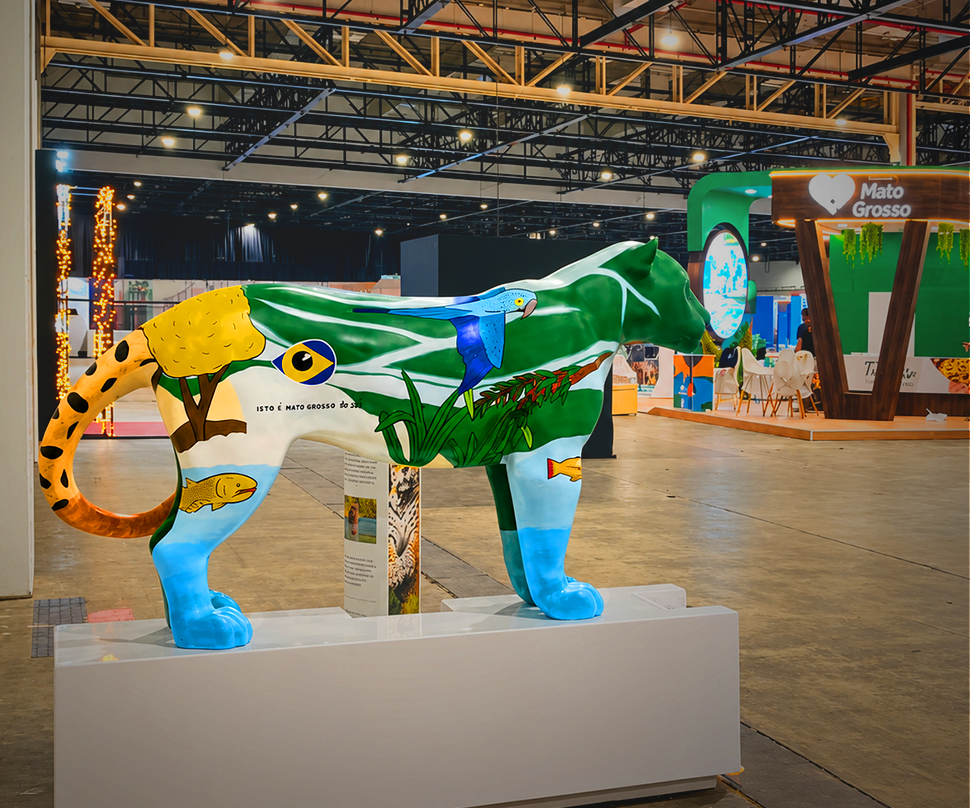
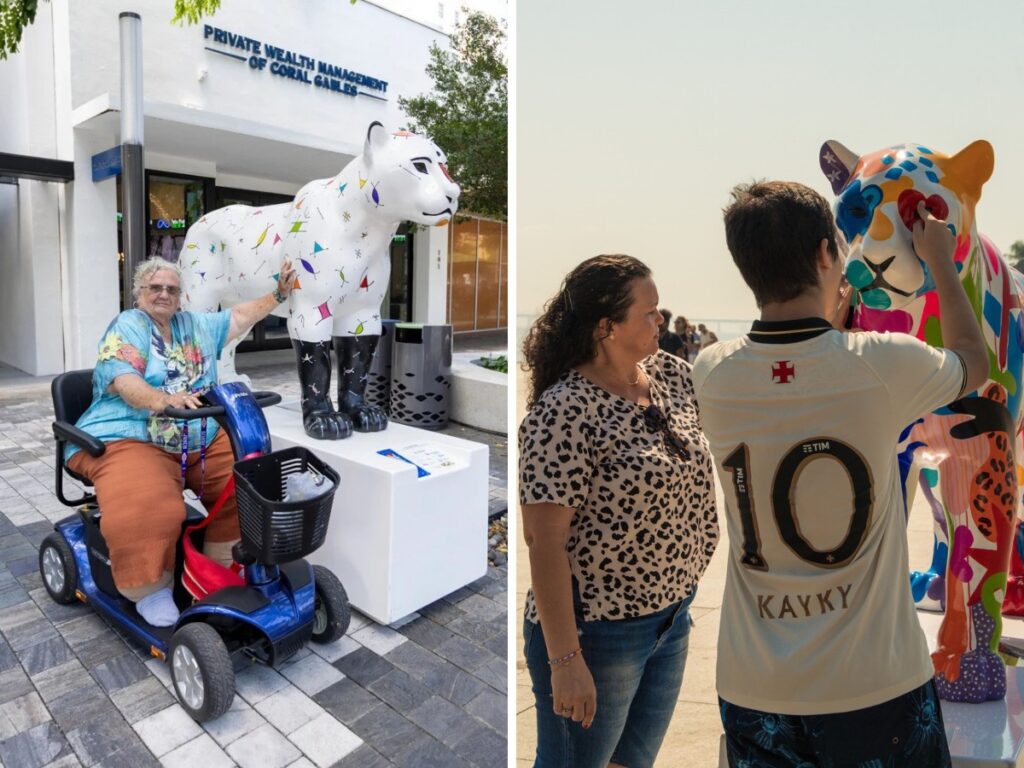
During ABAV Expo, held in São Paulo from September 30 to October 2, 2026, the partnership between Fundtur MS – Visite MS and Jaguar Parade was represented through two artworks: a jaguar created especially for the brand and the interactive sculpture Onça Tátil — Cores da Liberdade.
Created by blind and visually impaired students from the Benjamin Constant Institute during Jaguar Parade Rio 2024, the artwork was designed to provide a sensory experience that goes beyond visual observation. Beads, tactile materials, impressions of the artists’ hands, and a basketry-inspired pair of glasses make up the sculpture, accompanied by a descriptive plaque in Braille and large print.
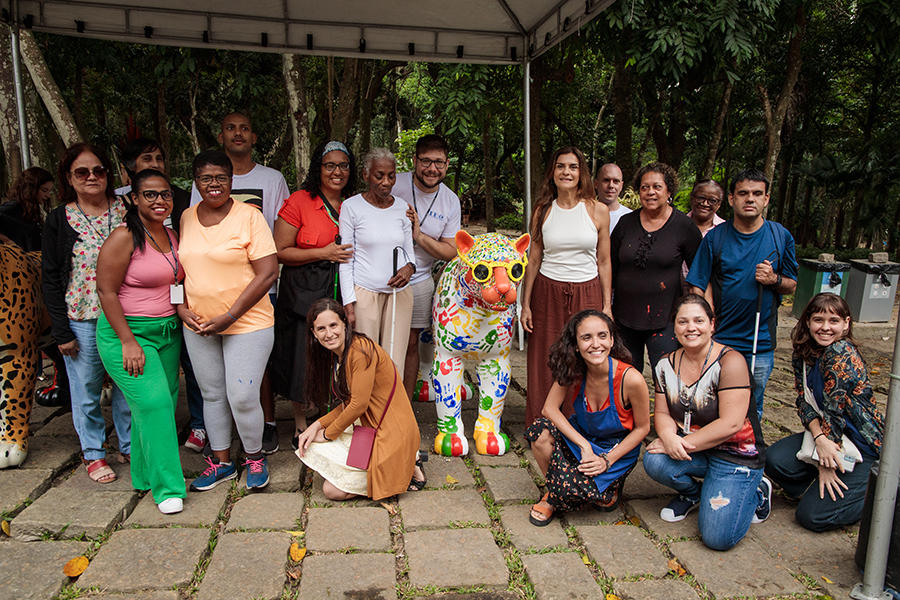
The students’ participation in the creation of the artwork reinforces the potential of art as a space for expression, autonomy, and inclusion, expanding the ways in which audiences can interact with the piece.
The initiative also connects with Jaguar Parade’s mission: using art as a platform to raise awareness about the jaguar and biodiversity conservation. By bringing this message into accessible experiences, the project expands the possibilities for dialogue with diverse audiences.
Tourism and Culture for Everyone
Building more accessible destinations depends on collaboration between public institutions, tourism companies, social organizations, and cultural initiatives. In this context, the partnership between Fundtur MS and Visite MS and Jaguar Parade brings tourism promotion closer to inclusion, showing how different initiatives can expand access to experiences involving nature, culture, and art.
In Mato Grosso do Sul, advancing this agenda means working to ensure that more people can experience the state’s natural and cultural richness. After all, making an experience accessible means expanding opportunities for participation and ensuring that everyone can be part of it.