

The Jaguar as a Migratory Species: What the UN Recognition Means and What to Expect from CMS COP15, Held in the Pantanal
The Jaguar as a Migratory Species: What the UN Recognition Means and What to Expect from CMS COP15, Held in the Pantanal
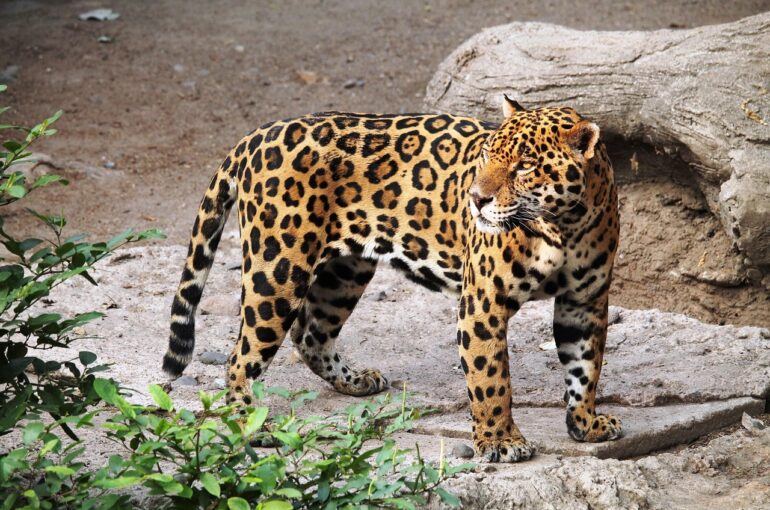
Have you ever imagined a jaguar crossing borders between countries? Perhaps not in the same way as birds crossing continents or whales crossing oceans. But for the UN, the jaguar (Panthera onca) is officially recognized as a migratory species, and this changes the way we can protect it.
The Jaguar: The Traveler That Connects Countries
In 2020, the jaguar was included in Appendices I and II of the Convention on the Conservation of Migratory Species of Wild Animals (CMS), also informally known as the Bonn Convention, named after the German city where it was signed in 1979.
The inclusion took place during the 13th Conference of the Parties to the CMS (COP13), held in Gandhinagar, India, and officially entered into force on May 22, 2020. This means that the jaguar came to be recognized as a migratory species whose management and protection require international cooperation among countries that share its populations.
In theory, a jaguar could sleep in Brazil, hunt in Bolivia, or travel through Paraguay. Nature does not recognize the lines drawn on maps, and the CMS acknowledges this reality by encouraging countries to cooperate in protecting habitats and ecological corridors.
Protecting the jaguar means protecting rivers, forests, wetlands, and hundreds of other species, making it a true umbrella species for Latin America.
CMS COP15: Connecting Countries Through the Jaguar
From March 23 to 29, 2026, Campo Grande, in Mato Grosso do Sul, Brazil, will host the 15th Conference of the Parties to the Convention on the Conservation of Migratory Species. This is the main international forum dedicated to the conservation of species that cross borders, including the jaguar.
The event will bring together governments, scientists, civil society organizations, and Indigenous peoples to discuss:
- Ecological corridors and cross-border connectivity;
- Protection of essential habitats;
- Cooperation between countries for monitoring and research;
- Strategies to address threats such as habitat loss, hunting, and climate change.
For the jaguar, CMS COP15 is particularly important. Every decision involving connectivity and territorial preservation directly affects its ability to move freely and maintain healthy populations.
Brazil, home to one of the world’s largest jaguar populations and to the Pantanal, a strategic habitat for the species, plays a central role in this debate.
A concrete example of how cross-border conservation works in practice is the Jaguar Rivers Initiative, which connects the efforts of organizations in Brazil, Argentina, Bolivia, and Paraguay.
The initiative creates ecological corridors along the Paraná River basin, protecting rivers, forests, and natural habitats while allowing jaguars and other species to move safely between different biomes.
In Brazil, Onçafari contributes its expertise in conservation and the protection of properties with native vegetation, expanding regional connectivity and strengthening biodiversity across South America.
Jaguar Parade: Turning Conservation into Art

While international conferences work with treaties and targets, Jaguar Parade brings the discussion to the streets.
The colorful jaguar sculptures create “urban corridors of awareness,” making visible what happens in ecological corridors: space, freedom, and protection.
Each sculpture is an invitation to reflect: jaguars need space to move, and we need living forests in order to continue to exist.
In addition, the funds raised through artwork auctions are directed to non-governmental organizations working directly to protect ecological corridors and conserve the species, transforming awareness into tangible impact.
A Future Without Barriers
The UN’s recognition of the jaguar as a migratory species reinforces a simple yet powerful idea: biodiversity does not respect political borders.
At CMS COP15, governments and experts work toward a world where jaguars can move freely between countries. On the streets, Jaguar Parade transforms this idea into a concrete, engaging, and visual experience.
Whether through international agreements or sculptures displayed across cities, the message is the same: ensuring that the largest cat in the Americas remains free to move, connecting territories, countries, and people.