
Habitat Project: When Art Opens Doors to Belém
Habitat Project: When Art Opens Doors to Belém
There are projects that are born not only from an idea. They are born from a gesture. From an open door. From someone saying: come in, see where I come from, see what moves me.
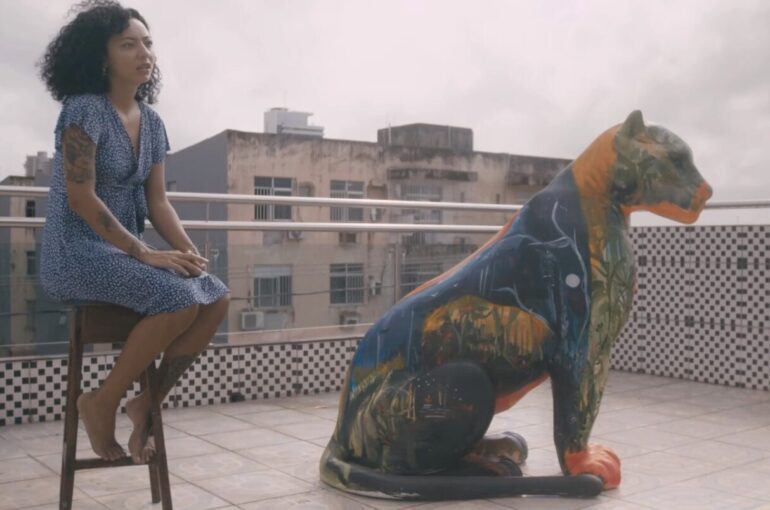
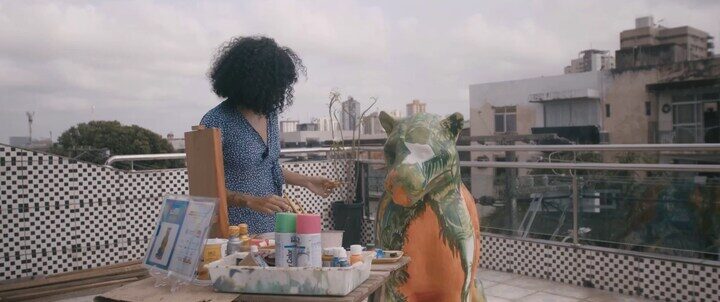
The Habitat Project, sponsored by Itaú and carried out during Jaguar Parade Belém, was exactly that: an intimate, everyday and powerful invitation to enter the home, routine and inner world of artist Bárbara Savannah as she painted her jaguar, Estrela do Norte.
And entering the home of an Amazonian artist inevitably also means entering her territory. Not only the geographical territory, but the emotional and symbolic one — the world she invents and reinvents every day through paintings, murals and her own imagination.
On Inventing Landscapes — and Getting Lost in Them
Throughout an 8-minute mini-documentary, Bárbara talks about the curious practice of inventing landscapes and then immersing herself in them. She does not know whether this will accompany her throughout her entire life, but she knows that, for now, it is a way to breathe.
This invention is not fantasy. It is condensed memory, weather, the smell of rain, fragments of a Pará afternoon pieced together through fragments of color. These are scenes that may never have happened exactly as she paints them, but that express a deep emotional truth about those who live in Belém.
After all, the Amazon is not limited to the saturated green that the outside imagination keeps repeating. Bárbara explores other neons, other purples, blues from nightfall — colors that belong to the city before they belong to the forest. This already says a great deal about her jaguar.
The Jaguar as Mirror and Map: Estrela do Norte
The work Estrela do Norte emerges from three points of light: the forests, late afternoon and the Pará night.
The jaguar carries on its chest the incandescent glow of this North that burns, pulses and never goes out. It watches night arrive on the horizon with a gaze that reflects the first star, the one that always appears before the rest of the sky follows.
It is a jaguar born from contemplation. But also from reconciliation.
For Bárbara, Belém has always been a place to “stop and find yourself.” A place where watching the sunset in Jurunas with her family becomes a moment of care. Painting this jaguar, therefore, is also painting a kind of home in motion.
Belonging
There are artists who create inside their own bubble. Bárbara does the opposite: she creates through the city. The studio matters, of course, but the neighborhood matters just as much.
She talks about how everything enters her work, even if it does not literally become part of the sculpture: the cat passing by, the person shouting in the street, the changing wind, the rain that comes and goes. This is how she builds a sense of belonging: by looking at what is built and rebuilt around her every day.
By documenting this everyday life while she painted her jaguar, the Habitat Project reveals something fundamental: art does not come from an idealized place. It comes from the ground, from the neighborhood, from real life. And when this is filmed truthfully, the work ceases to be just a sculpture and becomes context.
Art as Connection and Reciprocity
In one of the most beautiful passages, Bárbara explains that art helps her connect with people. It is not about delivering a ready-made message, but about offering something they need.
And people give something back. They say that her works remind them of memories. That they bring moments of contemplation. That they create silence. That they bring warmth.
At this point, the sculpted jaguar ceases to be merely a representation of an animal: it becomes a bridge.
Because when someone sees a painted jaguar in the middle of the city — an urban, concrete, fast-paced environment — and becomes curious, it opens conversations that might never have happened otherwise. It opens a dialogue with people who might not necessarily seek out this subject, this aesthetic or this cause.
This is one of the great powers of Jaguar Parade: art becomes an invitation to think about a species that, ironically, we almost never see, but that shapes the entire balance of the Amazon and what we hope for the future.
Watch the full documentary below: